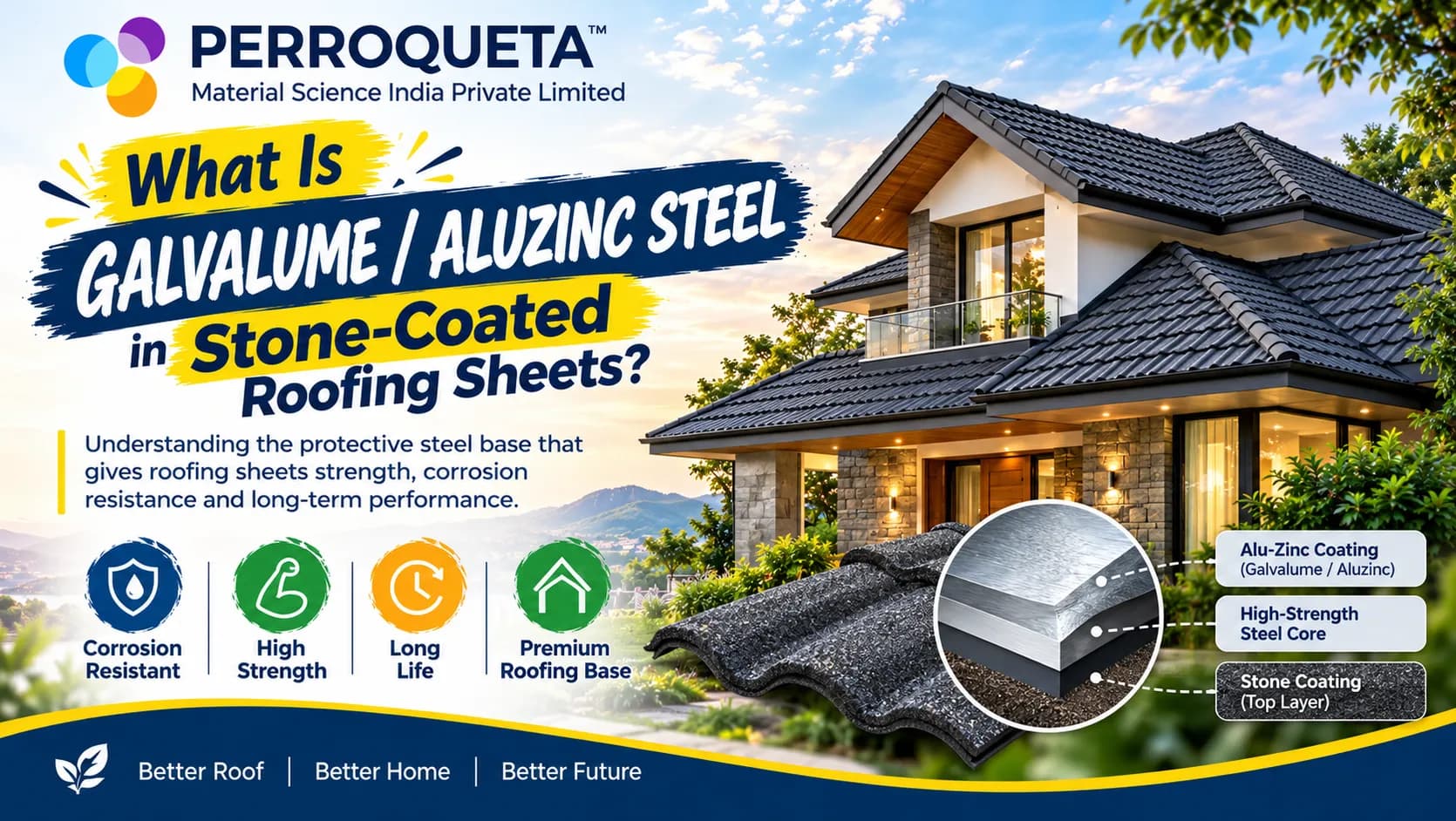
When choosing a roofing material, most people focus on the colour, appearance, or price. However, the real strength of a roof lies beneath its surface. One of the key reasons why modern roofing systems last for decades is the use of Galvalume, also known as Aluzinc steel. This advanced steel forms the foundation of every high-quality Stone Coated Roofing Sheet, providing exceptional durability, corrosion resistance, and long-term performance.
Unlike traditional roofing sheets that may rust or weaken over time, Galvalume steel is specially engineered to withstand harsh weather conditions. Whether it is heavy rainfall, coastal humidity, scorching heat, or changing temperatures, this steel offers reliable protection while maintaining its structural integrity.
In this blog, we will explain what Galvalume or Aluzinc steel is, how it is manufactured, why it is used in a Stone Coated Roofing Sheet, and the benefits it offers for residential, commercial, and industrial buildings.
What Is Galvalume or Aluzinc Steel?
Galvalume steel, often called Aluzinc steel, is a premium-grade steel coated with a unique alloy consisting of approximately 55% aluminium, 43.4% zinc, and 1.6% silicon. This combination provides the ideal balance between corrosion resistance and structural strength.
The aluminium creates a protective barrier against moisture and environmental damage, while the zinc offers sacrificial protection if the surface is scratched. Silicon helps the coating bond effectively with the steel core during manufacturing.
Because of this advanced coating, Galvalume steel lasts significantly longer than ordinary galvanised steel. It has become one of the preferred materials for manufacturing premium roofing products, including every high-quality Stone Coated Roofing Sheet.
Why Is Galvalume Steel Used in Stone Coated Roofing Sheets?
The base material determines how long a roofing sheet will perform. Since stone-coated roofs are designed to last for decades, manufacturers require a steel that can resist corrosion, remain lightweight, and retain its strength over time.
A Stone Coated Roofing Sheet combines the strength of Galvalume steel with a protective stone-chip coating. This layered construction provides superior resistance against rust, fading, cracking, and weather damage while maintaining an attractive roof appearance.
The result is a roofing solution that is durable, aesthetically pleasing, and suitable for various climatic conditions across India.
The Manufacturing Process of Galvalume Steel
Understanding how Galvalume steel is produced helps explain why it performs so well in roofing applications.
Steel Preparation
The manufacturing process begins with high-quality cold-rolled steel coils. The steel is carefully cleaned to remove dust, grease, and impurities. This ensures that the protective alloy coating bonds evenly to the surface.
Proper preparation also improves the overall durability and finish of the final Stone Coated Roofing Sheet, ensuring long-lasting performance in different weather conditions.
Hot-Dip Coating Process
Once prepared, the steel passes through a molten bath containing aluminium, zinc, and silicon. During this hot-dip process, the alloy forms a uniform protective coating on both sides of the steel.
This coating becomes the primary defence against corrosion. It protects the steel core from moisture, oxygen, and pollutants that normally cause rust.
Surface Treatment
After coating, the steel undergoes controlled cooling and surface treatment. This process improves coating adhesion and prepares the material for additional protective layers.
The treated surface also provides better bonding for the primer and stone chips used in a Stone Coated Roofing Sheet.
Quality Inspection
Each steel coil is thoroughly inspected before moving to the next production stage. Manufacturers check coating thickness, surface finish, adhesion, and overall consistency to ensure the steel meets industry standards.
Strict quality control guarantees reliable performance and a longer service life.
How Galvalume Steel Becomes a Stone Coated Roofing Sheet?
Galvalume steel is only the beginning. Several protective layers are added to create a complete Stone Coated Roofing Sheet.
Protective Primer Application
A specialised primer is applied to both sides of the Galvalume steel. This layer improves adhesion between the steel and the stone coating while adding another level of corrosion protection.
The primer also enhances the durability of the finished roofing sheet under varying climatic conditions.
Natural Stone Chip Coating
Natural stone granules are bonded to the upper surface using high-performance acrylic resin. These stone chips provide the roof with its distinctive appearance and improve UV resistance.
The textured finish also reduces glare while adding an elegant architectural look to the building.
Final Protective Glaze
A clear protective glaze seals the stone chips securely in place. This final layer improves colour retention, prevents stone loss, and protects the roof against dust, rain, and ultraviolet exposure.
Together, these layers create a robust Stone Coated Roofing Sheet that combines beauty with long-lasting protection.
Advantages of Galvalume Steel in Stone Coated Roofing Sheets
Superior Corrosion Resistance
One of the biggest advantages of Galvalume steel is its excellent resistance to corrosion. The aluminium coating protects the steel from moisture, while zinc provides additional protection if the surface is damaged.
This makes every Stone Coated Roofing Sheet highly suitable for coastal regions, high-humidity areas, and locations experiencing heavy rainfall.
Longer Service Life
Roofs made with Galvalume steel typically last much longer than conventional roofing materials. Their protective coating slows down corrosion and reduces structural deterioration over time.
Homeowners benefit from fewer repairs and a roofing system that continues to perform efficiently for decades.
Excellent Heat Reflection
Aluminium naturally reflects a significant amount of solar heat. This helps reduce heat absorption through the roof and contributes to improved indoor comfort.
A Stone Coated Roofing Sheet built with Galvalume steel can help lower cooling requirements during India's hot summer months.
Lightweight Yet Strong
Despite its impressive strength, Galvalume steel remains considerably lighter than concrete tiles or traditional roofing materials. The reduced weight places less stress on the building structure.
Lightweight roofing also makes transportation, handling, and installation faster and more economical.
Better Weather Resistance
Indian weather can be unpredictable. Roofs often face heavy rain, strong winds, intense sunlight, and temperature fluctuations throughout the year.
Galvalume steel provides excellent protection against these changing weather conditions, allowing the roof to maintain both its strength and appearance.
Low Maintenance Requirements
Because Galvalume steel resists rust and corrosion naturally, roofing systems require very little maintenance. Occasional cleaning and routine inspections are usually enough to keep the roof in excellent condition.
This reduces long-term maintenance expenses while extending the roof's lifespan.
Applications of Stone Coated Roofing Sheets Made with Galvalume Steel
The strength and versatility of Galvalume steel make it suitable for a wide range of projects.
Residential Homes
Homeowners prefer stone-coated roofs because they combine attractive aesthetics with excellent weather protection. The roof complements both traditional and modern architectural styles while requiring minimal maintenance.
Commercial Buildings
Offices, retail outlets, educational institutions, and hospitality buildings benefit from the durability and professional appearance of a Stone Coated Roofing Sheet. Its long lifespan helps reduce operational maintenance costs over the years.
Industrial Structures
Factories, warehouses, workshops, and production facilities require roofing that can withstand demanding environmental conditions.
Galvalume steel provides the structural reliability needed for these large-scale applications.
Farmhouses and Resorts
Stone-coated roofs are increasingly used in farmhouses, villas, cottages, and resorts because they offer the visual appeal of traditional roofing materials while delivering modern performance.
The elegant finish enhances the property's overall appearance without compromising durability.
How to Choose High-Quality Stone Coated Roofing Sheets?
Not every roofing sheet offers the same level of quality. Before making a purchase, always check the material used for the base steel.
A premium Stone Coated Roofing Sheet should be manufactured using genuine Galvalume or Aluzinc steel with a high-quality alloy coating. The stone chips should be evenly distributed, firmly bonded, and protected by a durable acrylic glaze.
It is also advisable to choose roofing products from trusted manufacturers that follow strict quality standards and offer product warranties. A well-manufactured roofing sheet will deliver better durability, improved appearance, and greater value over its lifespan.
Conclusion
The performance of any roof depends largely on the quality of its core material. Galvalume, also known as Aluzinc steel, has become the preferred foundation for modern roofing because it combines exceptional corrosion resistance, structural strength, heat reflection, and long-term durability.
When paired with natural stone chips and multiple protective coatings, it creates a premium Stone Coated Roofing Sheet capable of withstanding India's diverse weather conditions while maintaining its elegant appearance for many years.
Whether you are constructing a new home, upgrading an existing roof, or planning a commercial project, choosing a roofing system built with Galvalume steel is a smart long-term investment.